

30% of a teacher's week — back to the pupils
We don't save hours into a spreadsheet. We give them back to the children: more eye contact, more 1:1, more teacher in the room — and a teacher who still has energy when the day ends.
back to the children — every week
Equivalent to an extra teacher in roughly one in six classrooms across England.
Calculated from ~468,000 FTE teachers in state-funded schools (source: DfE School Workforce Census).
A teacher's week, before and after
Based on feedback from teachers using the platform — the saved hours come almost entirely from preparation and administration, not from teaching time.
Estimate based on direct customer feedback. Actual savings depend on which modules a school adopts.
Where the hours disappear today
Three honest realities most schools recognise.
Preparation from scratch
The same activities get rebuilt again and again — one teacher at a time, often late at night.
Administration in silos
Absences, grades, communication and reports live in separate systems with no shared context.
Collaboration that costs more than it gives
The faculty team meets, but everything drowns in emails, attachments and conflicting versions.
Hours back every week on preparation
Plan once, differentiate automatically, reuse across years and teams.
Lesson Prep with VARK groups
Replaces: Manual per-pupil differentiation
AI toolbox (40+ tools)
Replaces: Quizzes, rubrics, examples built by hand
Yearly plans → Lesson Prep auto-prefill
Replaces: Rewriting the same content every week
Curriculum coverage badge
Replaces: Manual mapping against the National Curriculum
Smart Canvas and Smartboard templates
Replaces: PowerPoint from scratch
Reading Coach, Dictation & interactive content
Replaces: Hand-built practice and tests
Admin that fills itself in
Timetable, absences, grades, messages and reports share the same data — no double entry, no late-night catch-up.
Timetable + substitute matcher + swap marketplace
Replaces: Phone calls and spreadsheets about cover
Subject allocation workbench + year-norm check
Replaces: Excel sheets and manual norm calc
Pupil log with auto-population
Replaces: Manual note-writing after absences/grades
Absence approvals + statutory export
Replaces: Double entry into national systems
Gradebook auto-feed (percent → grade)
Replaces: Manual conversion and entry
Messaging with thread summaries & translation
Replaces: Long email threads and Google Translate
Quality multiplied, not duplicated
One teacher prepares, the whole team teaches better. Shared lesson prep, shared rubrics, shared knowledge — without endless email threads.
Faculty & year teams with shared Lesson Prep
Replaces: Different versions in every teacher's folder
PBL team ↔ Lesson Prep auto-mirror
Replaces: Manual coordination across projects
Learning circles with shared output to the Knowledge hub
Replaces: Minutes nobody reads again
Co-teacher, support teacher and assistant on the timetable
Replaces: Unclear roles and duplicate cover
Real-time co-editing in Docs, Sheets and Slides
Replaces: Email attachments and version chaos
The real reason it adds up to 30%
Every module shares the same data model. You never type the same thing twice.
A substitute booked in the timetable automatically updates the schedule, notifies parents, surfaces in the pupil log and inherits the lesson prep — without anyone copying anything.
What does 30% actually look like in one classroom?
The maths per class
30% of a teacher's week per class ≈ 4 extra hours. Here's where they can go:
Estimate based on 30% saving of a typical 40-hour week. Figures vary by class and module mix.
30% more teacher — and the class can feel it
30% isn't the goal. It's what makes the real goal possible: the teacher being with the pupils, not behind a screen.
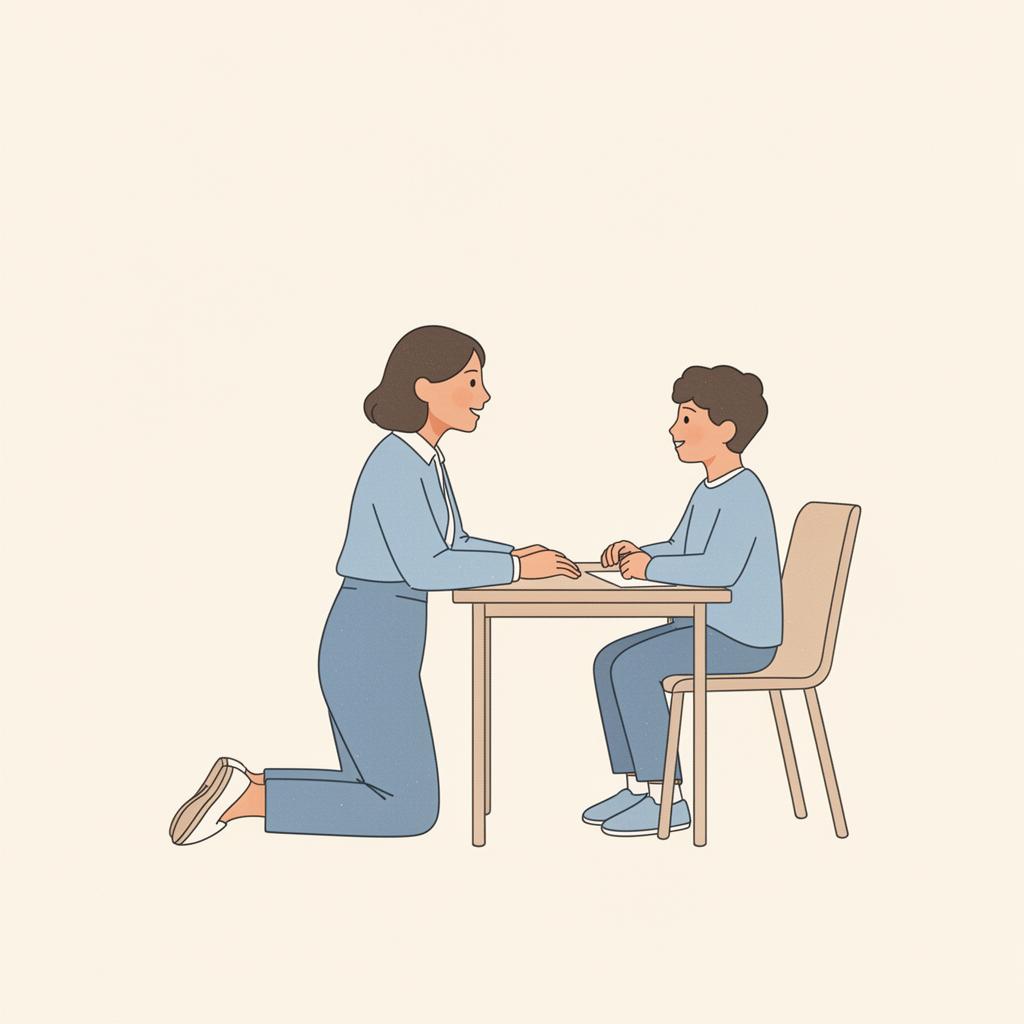
More adult contact
1:1 conversations, small check-ins, the teacher reaching every pupil — including the quiet ones.

Faster feedback
Grades auto-feed, marks land in one place. Sarah knows what to work on today — not next week.

Better teaching, not just more of it
When the faculty team shares prep, all four classes get the best version of a unit — not the one a tired teacher could build at 10 PM.
A teacher who's there
No late-night catch-up, no administrative burnout. The teacher goes home on time and shows up fully present the next morning.
I get to see the pupils again — not just race past them.
— Middle school teacher (placeholder)
My child says the teacher has time to talk now. She didn't before.
— Parent, Year 4 (placeholder)
And the small wins everywhere else
Minutes saved here and there that quietly add up over a school year.
Year-wheel reminders
Statutory deadlines surface automatically.
AI copilot
Quick answers, suggestions and drafts across the platform.
Wellbeing surveys
Official questionnaires with k-anonymised reporting.
After-school kiosk
Parents are notified automatically on check-in and -out.
Playground duty with fairness auto-fill
No more email traffic about who's on duty.
Frequently asked
Is 30% realistic for our school?
Most schools see the saving after one semester once timetable, lesson prep and the pupil log are in use. If you adopt only one module, savings typically land between 8–15%.
Does it work without AI?
Yes. AI accelerates things, but the core saving comes from modules sharing data. You can disable AI at school level and still save significant time.
What about GDPR and PII?
Data sits in the EU. An AI chokepoint blocks personal identifiers before they reach any AI provider. Every prompt is audited for 180 days.
How long is onboarding?
Typically days, not months. We provide a 7-step guide plus sample data so you can see it working before migrating real data.
Does it replace teachers?
No. It gives the time back to the students. Every decision, every grade and every message still has a teacher behind it.
Give your teachers their week back
30% time saved is a quiet revolution. Start in days, not months.